
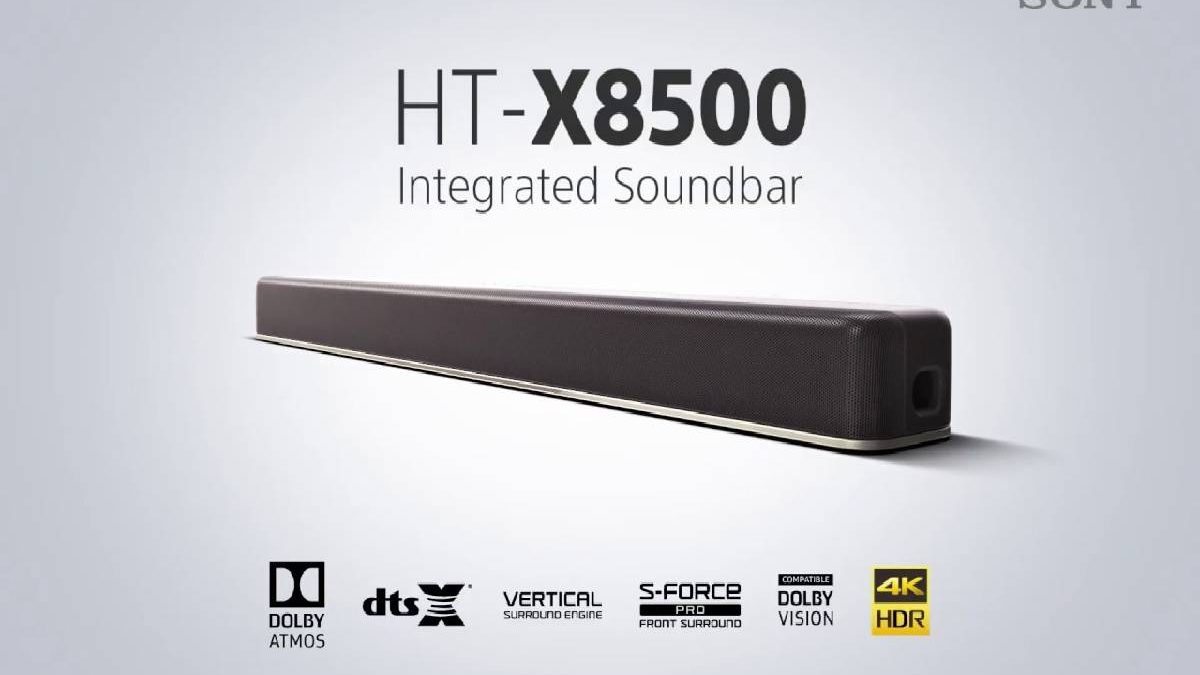
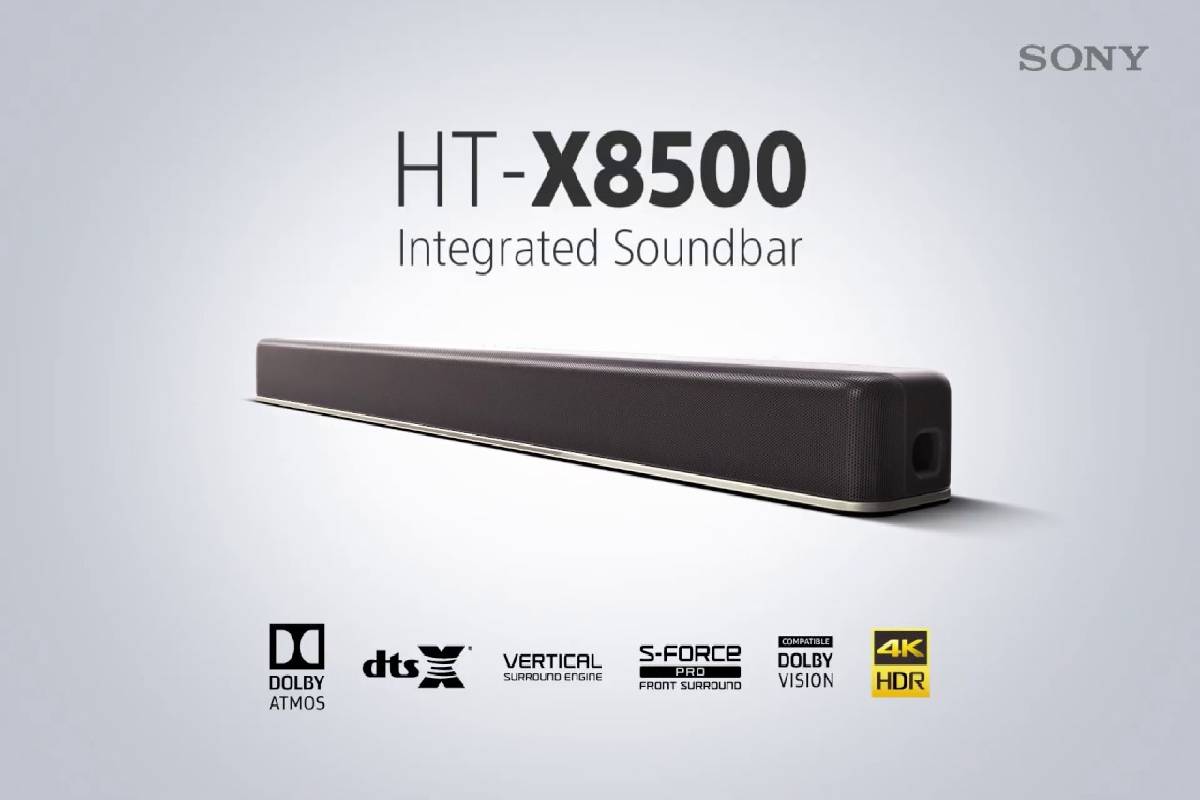
A good soundbar should improve television audio without making a home entertainment setup complicated or expensive. The Sony HT-X8500 aims to achieve exactly that. Released as a compact, single-unit soundbar, it combines built-in subwoofers, Dolby Atmos support, DTS decoding, and virtual surround processing in a design that fits neatly beneath a television.
Unlike traditional home theatre systems, the HT-X8500 does not require a separate subwoofer or additional surround speakers. This makes it attractive to people who want stronger bass and a wider cinematic sound without filling their living room with equipment.
However, virtual surround sound has limitations. Dolby Atmos is designed to create a three-dimensional audio experience, and a single soundbar cannot reproduce the same physical speaker placement as a dedicated multi-speaker system. The important question is whether Sony’s processing technology delivers a convincing improvement in everyday viewing.
Table of Contents
Sony HT-X8500 Soundbar: Design and Build Quality
The Sony HT-X8500 has a slim, understated design that suits many modern living rooms. It measures approximately 890mm wide, 64mm high, and 96mm deep, making it suitable for placement beneath many televisions without occupying excessive space.
Its low profile is especially useful when a television sits on a stand rather than being wall-mounted. Nevertheless, buyers should measure the available space carefully to ensure that the soundbar does not obstruct the screen or interfere with the television’s infrared receiver.
The front grille protects the speakers while allowing sound to pass through. Its dark finish gives the unit a restrained appearance, and the overall design avoids unnecessary decorative elements.
One of the biggest advantages is the integrated subwoofer arrangement. Instead of placing a separate bass unit on the floor, Sony incorporates dual subwoofers inside the soundbar. This reduces cable clutter and makes the system easier to position in smaller rooms.
The trade-off is that a compact enclosure has physical limits. A separate, larger subwoofer can generally move more air and produce deeper bass. The HT-X8500 prioritises convenience and space-saving design rather than matching a larger home theatre system in every respect.
Dolby Atmos and DTS:X: How Virtual Surround Works
The HT-X8500 supports Dolby Atmos and DTS, two audio formats designed to position sounds around the listener and create a more immersive presentation. These formats can make compatible films feel more spacious by placing sound effects at different apparent positions.
However, format support does not automatically mean that a soundbar can reproduce every effect with the same precision as a dedicated surround system.
Sony uses its Vertical Surround Engine and S-Force PRO Front Surround processing to create a virtual surround experience. These technologies process audio so that sounds appear to extend beyond the physical width of the soundbar.
The result can be convincing with suitable content. Film soundtracks may feel wider, and certain effects can appear to move around the listening area. The processing can also enhance compatible non-Atmos content, depending on the selected sound mode and source.
Still, the effect depends on room layout, listening position, reflections, and the soundtrack itself. A listener sitting directly in front of the bar may experience a different result from someone seated far to one side.
The HT-X8500 should therefore be understood as a compact soundbar with virtual immersive audio, not a replacement for a properly positioned 5.1.2 or 7.1.4 speaker system.
Sound Quality: Movies, Television, and Music
Movie playback is one of the HT-X8500’s main strengths. Compared with many television speakers, it can provide a fuller presentation, stronger bass, and a wider soundstage. Explosions, dramatic musical passages, and action sequences can feel more substantial without requiring a large collection of separate speakers.
The built-in subwoofers provide useful low-frequency impact for a compact system. However, they cannot reproduce the deepest bass with the same physical force as a dedicated subwoofer in a larger setup. This difference becomes more noticeable with bass-heavy action films and music.
Dialogue performance is another important consideration. Voices can sound reasonably clear, but independent reviews have noted that the overall sound can sometimes seem slightly dark or boxy. The effect varies with the content, room, and listening preferences.
Sony includes a Voice Mode to help make dialogue easier to follow. Night Mode can also be useful when watching television late at night, as it helps make quieter sounds more audible without requiring the same overall volume.
For everyday television, documentaries, and streaming programmes, these features can improve convenience. For viewers who prioritise highly accurate dialogue or precise musical reproduction, however, a soundbar with a dedicated centre channel or more detailed audio tuning may be a better fit.
Music playback is similarly practical rather than exceptional. Bluetooth makes it easy to play music from a compatible phone, while the soundbar can also receive audio through a connected television or other supported equipment. It works well for casual listening, although demanding music enthusiasts may prefer a dedicated stereo system.
Connectivity and Setup: What Buyers Should Know
The HT-X8500 keeps installation relatively straightforward. Its main connections include HDMI input and HDMI output with ARC/eARC support, along with an optical digital audio input. Bluetooth 5.0 provides a wireless option for compatible audio sources.
The HDMI connection is generally the best starting point when a television supports ARC or eARC. It can simplify control and help the system receive compatible audio formats. The soundbar also supports HDMI-CEC, which allows compatible connected devices to coordinate certain functions, such as power and volume.
The system supports 4K/60Hz video passthrough and compatibility with formats such as Dolby Vision. However, its HDMI capabilities are not equivalent to the newer HDMI 2.1 features required for 4K/120Hz passthrough. Buyers with modern gaming consoles should connect their console directly to a compatible television when higher refresh rates are important.
Optical audio is a useful alternative for televisions without a suitable HDMI audio connection. However, it does not provide the same audio-format capabilities as a compatible HDMI connection. The actual formats available also depend on the television, source device, and connection method.
Bluetooth is convenient for quick music playback, but HDMI is usually the better option for television and film audio. The soundbar does not have extensive connectivity options, so checking the available ports on existing equipment before purchasing is sensible.
Matching the Soundbar With Your Home Entertainment Setup
The HT-X8500 works best when it is treated as part of a complete entertainment setup. A compatible television, reliable HDMI connection, and well-positioned seating can make a noticeable difference to the listening experience.
Source devices matter, too. For example, a smartphone such as the Nokia 10 represents the type of mobile device people may use to manage media or select content, although actual compatibility depends on the device and available connection methods. Bluetooth is the straightforward choice for supported wireless audio playback.
For people who watch content on smaller screens as well as televisions, the best 8-inch tablets provide a portable option for reading, browsing, and streaming. A tablet cannot replace a television-based soundbar setup in every situation, but it can complement a flexible home entertainment routine.
The same principle applies to footage captured with equipment such as the DJI Mavic Pro 3. Watching recorded aerial videos on a large television with improved audio can make the viewing experience more engaging, provided the playback device and television are connected correctly.
These examples illustrate that a soundbar’s usefulness depends not only on its audio features but also on how easily it fits into the equipment people already own.
Limitations and Things to Consider Before Buying
Despite its convenient design, the HT-X8500 has several compromises. Its most obvious limitation is the lack of separate surround speakers. Virtual processing can create a wider impression of sound, but it cannot place physical speakers behind the listener.
The integrated subwoofers also limit the depth and impact of very low bass. People who enjoy bass-heavy music or powerful cinema effects may prefer a system with a dedicated subwoofer.
Connectivity is another consideration. Although the soundbar supports useful HDMI features, it has a limited number of connections compared with some larger systems. It also lacks built-in Wi-Fi streaming and voice-assistant functionality, so users looking for a smart, network-connected soundbar should compare alternatives carefully.
Room acoustics can affect results as well. Walls, furniture, seating position, and the distance between the soundbar and listener all influence how virtual surround processing is perceived. A demonstration in a shop may not reproduce the experience in a different room.
Finally, buyers should compare current prices rather than relying on the original launch price. The HT-X8500 is an older model, and its value today depends on local availability, condition, warranty, and competing products.
Other Soundbars Worth Considering
The Sonos Beam (Gen 2) is worth considering for buyers who want a compact soundbar with Dolby Atmos support and a broader smart-home feature set. It offers Wi-Fi connectivity and voice-assistant integration in supported configurations, although its performance and price differ from Sony’s design.
Another option is a soundbar with a separate wireless subwoofer. Such systems require more space, but they can deliver stronger low-frequency output. They may be more suitable for large rooms or people who regularly watch action films at higher volumes.
A larger multi-speaker home theatre system is another step up. It can provide more convincing directional effects because physical speakers reproduce sound from different positions. The disadvantage is additional equipment, more complicated installation, and often a higher overall cost.
The right alternative depends on priorities. Buyers who value a compact, self-contained design may prefer Sony’s approach, while those who want stronger bass or more precise surround placement should consider larger systems.
Final Verdict: Is the Sony HT-X8500 Worth Buying?
The Sony HT-X8500 remains an appealing choice for people who want a simple upgrade over built-in television speakers. Its compact design, integrated subwoofers, Dolby Atmos and DTS support, and straightforward setup make it convenient for everyday home entertainment.
Its strongest advantage is the balance between space and performance. There is no separate subwoofer to accommodate, and the virtual surround processing can create a more spacious presentation than the soundbar’s size might suggest.
However, it is important to keep expectations realistic. Its simulated surround effect cannot fully match a dedicated multi-speaker system, and its bass depth and dialogue presentation may not satisfy every listener.
For a small or medium-sized living room, the HT-X8500 can be a practical option when available at a competitive price. Before buying, check the connections required by your television, compare newer alternatives, and listen to the soundbar if possible. Its value comes from convenience and an engaging cinematic presentation, rather than from delivering the most advanced home theatre experience available.