
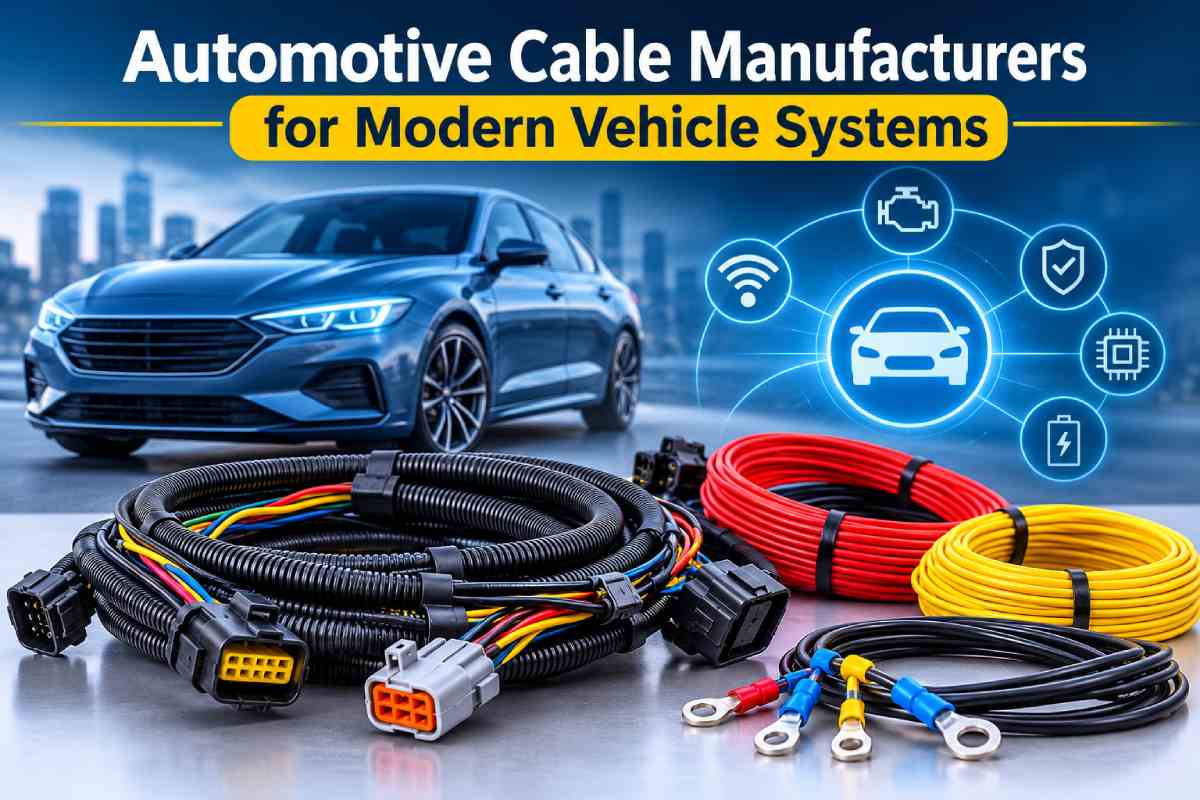
Modern vehicles have evolved far beyond simple transportation machines, now functioning as sophisticated networks of interconnected electronic systems that demand unprecedented performance from every component. Automotive cable manufacturers face mounting pressure to deliver solutions that can simultaneously handle high-voltage powertrains, guarantee flawless data transmission, and maintain signal integrity under extreme conditions. As electric vehicles proliferate and autonomous driving technologies advance, the question becomes not whether cables can keep pace, but how manufacturers will bridge the gap between current capabilities and tomorrow’s requirements.
Table of Contents
Meeting the Evolving Electrical Demands of Modern Vehicle Systems
As vehicles shift from mechanical systems to sophisticated digital platforms, automotive cable manufacturers face unprecedented challenges in designing electrical infrastructure that can support increasingly complex power and data requirements.
Modern vehicles demand cables that simultaneously handle high-voltage electric powertrains, advanced driver-assistance systems, infotainment networks, and autonomous driving sensors. Each system requires specific electrical characteristics: high-frequency data transmission for cameras and radar, robust shielding against electromagnetic interference, and thermal management for battery connections carrying hundreds of amperes.
Manufacturers must engineer cables that maintain signal integrity across temperature extremes while occupying minimal space within densely packed vehicle architectures. The integration of 48-volt electrical systems, alongside traditional 12-volt networks, further complicates design requirements, necessitating innovative insulation materials and conductor configurations that prevent cross-talk while ensuring reliability over the vehicle’s lifespan.
How Automotive Cable Manufacturers Ensure Quality, Safety, and Reliability
Meeting these demanding technical specifications requires automotive cable manufacturers to implement rigorous quality control frameworks throughout every stage of production. Advanced testing protocols validate electrical performance, mechanical strength, and environmental resistance before cables reach assembly lines.
Manufacturers conduct accelerated aging tests, thermal cycling examinations, and vibration stress analysis to simulate years of operational conditions within compressed timeframes. Compliance with international standards such as ISO 6722, SAE J1128, and IATF 16949 establishes baseline quality requirements. Third-party certification bodies verify adherence to these specifications through regular audits and product testing.
Traceability systems track raw materials from suppliers through finished goods, enabling rapid identification of potential defects. Statistical process control monitors production consistency, while automated inspection systems detect dimensional variances and insulation defects that human operators might miss. These thorough measures guarantee automotive cables deliver dependable performance throughout vehicle lifecycles.
Selecting High-Performance Materials for Durability and Electrical Efficiency
Because electrical performance and mechanical resilience depend fundamentally on material composition, automotive cable manufacturers prioritize conductor and insulation selection as critical design decisions.
Copper remains the predominant conductor choice due to its superior conductivity, though aluminum alternatives reduce weight in specific applications. Manufacturers evaluate trade-offs between cost, performance, and mass when specifying conductor materials. Insulation materials must withstand temperature extremes, chemical exposure, and mechanical stress throughout vehicle lifecycles.
Cross-linked polyethylene, thermoplastic elastomers, and fluoropolymers offer distinct advantages for different operating environments. High-temperature engine compartments demand materials rated beyond 150°C, while flexible routing areas require enhanced bend resistance. Advanced material combinations optimize both electrical efficiency and durability. Tin or silver plating on copper conductors prevents oxidation and improves termination reliability, extending cable service life in demanding automotive conditions.
Supporting Electric and Hybrid Vehicles With Advanced Cable Technologies
Electric and hybrid vehicles introduce voltage requirements and current loads that exceed conventional automotive applications by substantial margins. Automotive cable manufacturers must engineer conductors capable of handling systems operating at 400V to 800V while maintaining thermal stability under sustained high-current conditions. Shielding technologies become critical to prevent electromagnetic interference from disrupting vehicle sensors and communication networks.
Battery management systems require cables that resist voltage degradation and maintain signal integrity across temperature extremes ranging from -40°C to 150°C. High-voltage cable assemblies demand robust insulation materials like cross-linked polyethylene and silicone rubber that provide superior dielectric strength.
Manufacturers must also address weight reduction imperatives by developing lighter-gauge conductors with aluminum alternatives, balancing conductivity against vehicle efficiency targets. Rigorous testing protocols verify performance under accelerated aging conditions and guarantee compliance with international safety standards.
Meeting Automotive Industry Standards Through Rigorous Testing and Certification
As automotive cable assemblies integrate into increasingly complex vehicle architectures, manufacturers face stringent validation requirements that extend beyond basic electrical performance metrics. Compliance with ISO 6722, USCAR-2, and LV 112 standards demands thorough testing protocols that verify thermal resistance, abrasion durability, and chemical compatibility under extreme conditions.
Modern certification processes subject cables to accelerated aging tests, temperature cycling from -40°C to 150°C, and exposure to automotive fluids including oils, coolants, and cleaning agents. Electromagnetic compatibility (EMC) testing guarantees cables prevent signal interference in dense electronic environments where numerous systems operate simultaneously.
Third-party certifications from organizations like UL, TÜV, and VDE provide independent validation of safety and performance claims. These rigorous assessments verify flame retardancy, dielectric strength, and mechanical resilience, enabling manufacturers to supply cables meeting global automotive requirements while reducing warranty risks and guaranteeing long-term reliability.
Delivering Custom Cable Solutions for Complex Vehicle Electronics and Connectivity
Modern vehicle architectures demand cable solutions that accommodate hundreds of distinct electrical pathways, sensor connections, and data transmission requirements that vary considerably across vehicle platforms. Manufacturers must engineer custom cables that integrate seamlessly with specific vehicle designs, addressing unique spacing constraints, routing challenges, and electrical specifications.
Custom solutions enable proper interfacing between diverse components including advanced driver assistance systems, infotainment networks, battery management systems, and powertrain controls. Cable manufacturers utilize specialized design software and prototyping processes to develop configurations matching exact OEM requirements, ensuring compatibility with connector types, shielding specifications, and thermal management needs.
The customization process requires close collaboration between cable engineers and automotive designers throughout development cycles. This partnership approach allows manufacturers to optimize cable performance while accommodating evolving vehicle electronics architectures and emerging connectivity standards.
Building Scalable and Sustainable Manufacturing Processes for Future Automotive Needs
Automotive cable manufacturers face mounting pressure to scale production capacity while reducing environmental impact across their operations. Meeting rising demand for electric and autonomous vehicles requires flexible manufacturing systems that adapt quickly to new specifications and volume fluctuations. Advanced automation, modular production lines, and digital twin technology enable manufacturers to scale efficiently without compromising quality standards.
Sustainability initiatives focus on material optimization, waste reduction, and energy-efficient processes. Manufacturers increasingly source recyclable materials and implement closed-loop systems that minimize scrap.
Water-based insulation compounds and halogen-free materials reduce toxic emissions during production and end-of-life disposal. Investment in renewable energy, localized supply chains, and circular economy principles positions manufacturers to meet stringent regulatory requirements while controlling costs. These scalable, sustainable practices guarantee long-term viability in an evolving automotive landscape.