
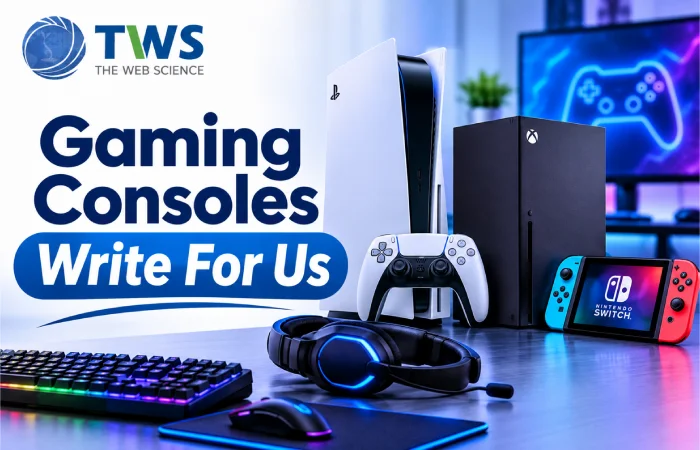
Gaming Consoles Write For Us
Are you passionate about video games, gaming hardware, or the latest developments in the gaming industry? The Web Science welcomes gaming enthusiasts, technology writers, bloggers, and industry professionals to share their knowledge with our readers. Whether you enjoy reviewing new games, exploring console features, or discussing classic gaming experiences, we invite you to contribute. Send your article ideas to contact@thewebscience.com.
What Are Gaming Consoles?
Gaming consoles are electronic devices designed primarily to play video games. They run games through dedicated hardware and software and connect to televisions, monitors, or built-in screens. Many modern consoles also offer online multiplayer, digital game downloads, streaming services, and other entertainment features.
Gaming consoles have changed considerably over the years. Early systems offered simple graphics and basic gameplay, while modern devices support detailed visuals, immersive audio, online services, and advanced controllers.
Popular console platforms include PlayStation, Xbox, and Nintendo. Each offers different hardware, game libraries, features, and playing experiences.
Different Types of Gaming Consoles
Gaming consoles are available in several formats. Each type suits different playing styles and preferences.
1. Home Gaming Consoles
Home consoles are designed to connect to a television or monitor. They usually offer powerful hardware, large game libraries, and support for accessories such as wireless controllers and gaming headsets.
2. Handheld Gaming Consoles
Handheld consoles include built-in screens and controls, allowing players to enjoy games while travelling or away from a television. Some handheld systems also support television connections or docking features.
3. Hybrid Gaming Consoles
Hybrid consoles combine handheld and home gaming experiences. Players can use them as portable devices or connect them to a larger display, depending on the model.
4. Retro and Classic Consoles
Retro consoles let players experience games from earlier generations. Some systems reproduce classic hardware, while others provide collections of older titles through modern devices.
5. Virtual Reality Gaming Systems
Virtual reality systems use headsets and compatible controllers to create immersive gaming experiences. They allow players to interact with digital environments in a more direct way.
Important Features of Modern Gaming Consoles
Console features can influence gameplay, performance, and the overall user experience. Some important features include:
- Graphics performance: Hardware capabilities affect image quality, visual effects, and supported frame rates.
- Storage capacity: Internal storage determines how many games and applications users can install.
- Controllers: Modern controllers may include motion sensors, vibration feedback, adaptive triggers, and wireless connectivity.
- Online connectivity: Internet access supports multiplayer gaming, digital purchases, updates, and online services.
- Backward compatibility: Some consoles support selected games from earlier generations.
- Audio support: Compatible headsets and sound systems can improve the gaming experience.
- Display support: Resolution, refresh rate, and other display features influence how games appear on compatible screens.
Popular Gaming Genres
Gaming consoles support a wide range of genres. Each offers different gameplay styles and experiences.
- Action and adventure: Combines exploration, challenges, combat, and storytelling.
- Sports: Simulates sports such as football, basketball, racing, and other competitive activities.
- Role-playing games (RPGs): Lets players develop characters, explore fictional worlds, and make decisions that influence gameplay.
- Strategy games: Focuses on planning, resource management, and tactical decisions.
- Simulation games: Recreates activities such as driving, building, farming, or managing virtual environments.
- Puzzle games: Challenges players to solve problems through logic, observation, and creativity.
- Multiplayer games: Allows players to compete or cooperate with others locally or online.
How to Choose the Right Gaming Console
Choosing a gaming console depends on personal preferences, budget, and the types of games you enjoy. Consider these factors before making a decision:
- Game library: Check whether the console offers the games and genres you want to play.
- Budget: Consider the console price along with games, controllers, subscriptions, and accessories.
- Performance: Compare graphics capabilities, loading times, and supported display features.
- Storage: Choose a device with enough space for your games and applications.
- Playing style: Decide whether you prefer home gaming, portable gaming, or a combination of both.
- Online services: Review multiplayer features, subscription requirements, and digital game access.
- Compatibility: Check whether your existing accessories and displays work with the console.
Advantages of Gaming Consoles
Gaming consoles offer several benefits beyond entertainment.
- Easy setup: Dedicated gaming systems provide a straightforward way to access and play compatible games.
- Social interaction: Multiplayer features allow friends and family members to play together.
- Entertainment options: Some consoles support media applications and additional entertainment services.
- Exclusive experiences: Certain platforms offer games that are not available on every competing system.
- Accessibility features: Options such as button remapping, captions, and other control settings can make gaming more accessible.
- Skill development: Some games encourage problem-solving, strategic thinking, coordination, and creativity.
Gaming Safety and Accessibility
Online gaming can connect players from different locations, but it is important to use suitable safety settings. Players should protect account information, use strong passwords, and be careful when communicating with unfamiliar people.
Parents and caregivers can review age ratings and activate parental controls where appropriate. Depending on the platform, these settings may help manage playtime, purchases, game access, and online communication.
Accessibility is another important part of modern gaming. Features such as adjustable text, subtitles, controller remapping, and alternative input options can help more people enjoy games. However, available features vary by console and individual game.
Topics We Accept for Gaming Consoles Write For Us
We welcome original articles covering different areas of console gaming, including:
- Reviews of new and upcoming video games.
- Gaming console comparisons and buying guides.
- Tutorials, walkthroughs, tips, and tricks.
- Gaming industry news and developments.
- Interviews and insights from game developers and designers.
- Features of different gaming genres.
- Guides to gaming accessories and controllers.
- Retrospectives on classic games and older consoles.
- Online gaming, multiplayer experiences, and gaming communities.
- Console performance, hardware, and software updates.
- Gaming accessibility, safety, and parental controls.
These topics are suggestions. We also consider other relevant ideas that provide useful information to gaming enthusiasts.
How to Submit Your Articles?
Would you like to share your gaming knowledge with The Web Science? We welcome original article pitches and completed submissions related to gaming consoles, video games, hardware, and the gaming industry.
Send your proposed topic or article to contact@thewebscience.com. Include a short introduction about yourself, your topic, and any relevant writing or professional experience. Our editorial team will review your submission and contact you if it meets our publishing requirements.
What We Look For
We are interested in contributors who can create useful, accurate, and engaging gaming content.
- Writers who have a genuine interest in gaming and gaming technology.
- Contributors who research their topics and provide reliable information.
- Writers who explain technical details in a clear and accessible way.
- Contributors who can meet agreed submission requirements and respond to editorial feedback.
- Authors who provide original perspectives rather than repeating existing content.
Why Write for The Web Science – Gaming Consoles Write For Us?
Contributing to The Web Science gives you an opportunity to share your gaming knowledge with readers interested in technology, games, and digital entertainment.
- Share your passion: Write about the games, consoles, and gaming topics you enjoy.
- Reach interested readers: Contribute useful content for people exploring gaming technology.
- Build your portfolio: Add published gaming articles to your writing collection.
- Exchange knowledge: Share practical tips, reviews, and insights with other gaming enthusiasts.
- Improve your skills: Develop your research, writing, and communication abilities.
Guidelines for Gaming Consoles Write For Us
Please review these requirements before submitting your article:
- Articles should be informative, engaging, original, and relevant to gaming.
- Articles should be up to 1,000 words maximum.
- Submit original work that has not been published elsewhere.
- Write in clear American English and use accurate gaming terminology.
- Organize your article with a clear title, introduction, headings, and conclusion.
- Use short paragraphs, bullet points, and examples where they improve readability.
- Check game titles, console specifications, release information, and other factual details before submission.
- Avoid plagiarism, keyword stuffing, excessive self-promotion, and unsupported claims.
- You may include up to two relevant links: one to your website and one to a related resource or core page.
- Submit relevant images with a preferred size of 700 × 450 pixels. Ensure you have permission to use them.
- The editorial team may edit or reject submissions that do not meet our quality standards. Submission does not guarantee publication.
Have an interesting gaming topic or useful experience to share? We look forward to hearing from you. Send your article or pitch to contact@thewebscience.com and contribute to The Web Science.