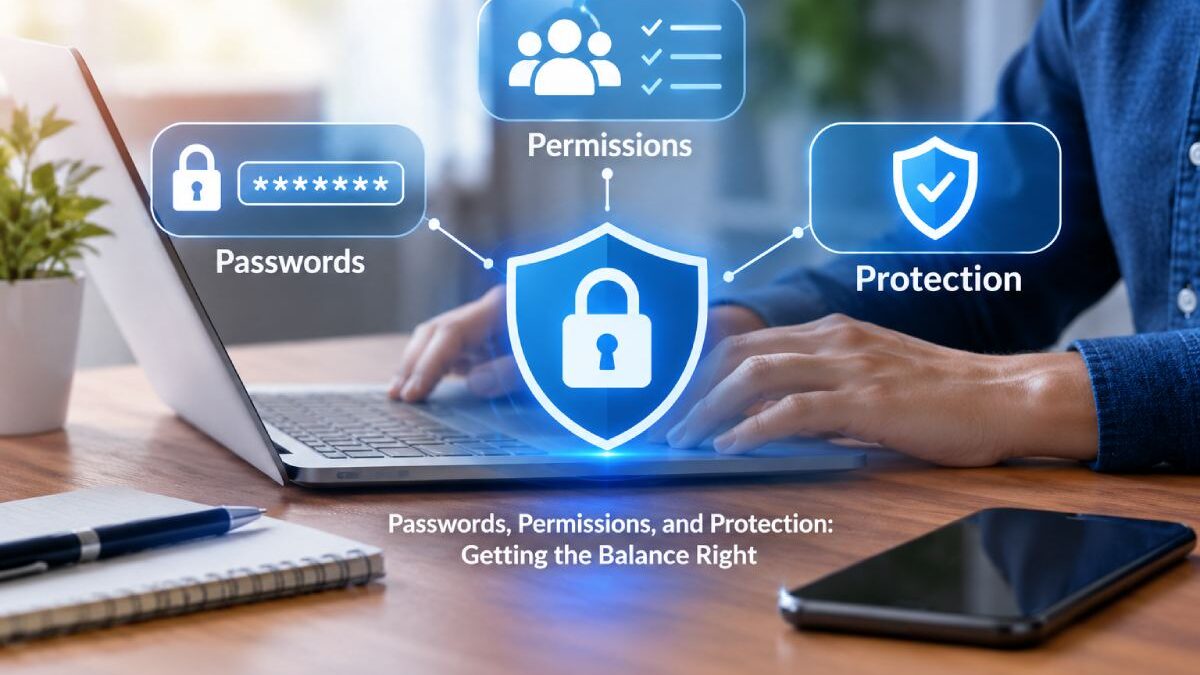
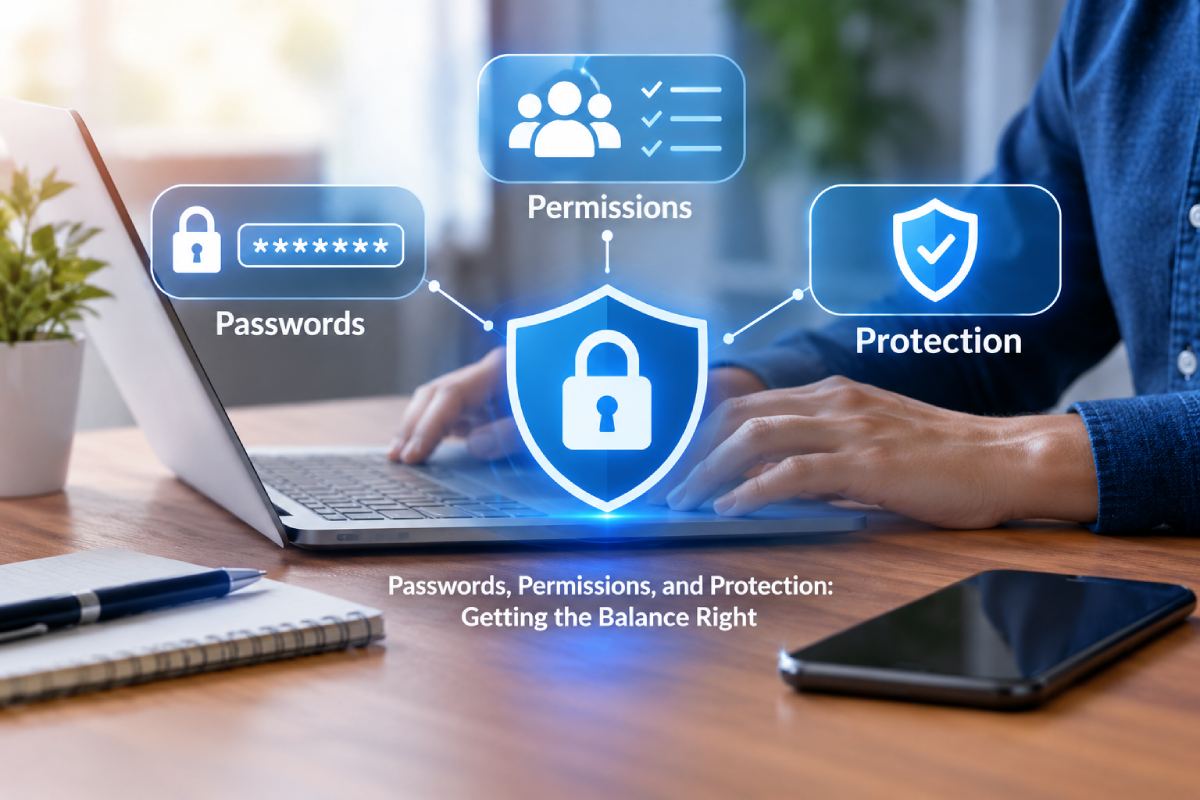
Keeping business information safe and secure is a constant challenge, particularly as employees rely on digital tools, cloud platforms, and remote working arrangements. Strong passwords, carefully managed permissions, and reliable security systems all play important roles in protecting sensitive data. Businesses must, however, also ensure that security measures do not make everyday tasks unnecessarily complicated.
Finding the right balance between protection and accessibility is essential for maintaining productivity while reducing cybersecurity risks.
Table of Contents
Why Strong Passwords Still Matter
Passwords remain one of the most common ways to protect business accounts and systems. Unfortunately, weak or reused passwords can create opportunities for cybercriminals to gain unauthorized access.
That’s why businesses should encourage employees to create long, unique passwords for every account. Password managers can make this easier by securely storing login credentials and generating complex passwords without requiring users to remember them all.
Multi-factor authentication adds another important layer of security. By requiring an additional verification step, businesses can reduce the likelihood of compromised passwords leading to successful account breaches.
However, password policies should remain practical. Excessively complicated requirements can encourage employees to adopt unsafe shortcuts, potentially undermining the protection these policies are intended to provide.
Managing Permissions Without Restricting Productivity
Not every employee needs access to every system, document, or application. Giving individuals unnecessary permissions increases the potential damage caused by compromised accounts, accidental changes, or internal security incidents.
The principle of least privilege offers a practical solution. Employees receive access only to the resources necessary for their responsibilities.
Businesses should regularly review permissions, particularly when employees change roles or leave the organization. Removing outdated access rights helps prevent security gaps from developing over time.
At the same time, permission management should not become an obstacle to legitimate work. Clear approval processes and role-based access controls can help employees obtain necessary resources without unnecessary delays.
Strengthening Protection Across Modern Networks
Passwords and permissions are important, but they cannot protect an organization against every cybersecurity threat.
Businesses increasingly operate across multiple locations, devices, and cloud applications. Traditional network security approaches may struggle to provide consistent protection across these environments.
Modern options, including a SASE VPN, can help organizations combine secure connectivity with cloud-delivered security capabilities. This approach supports safer access to business resources while accommodating employees working from different locations.
Additional safeguards, such as endpoint protection, encryption, and continuous monitoring, can further strengthen an organization’s security strategy.
The objective should be to create overlapping layers of protection rather than relying on any single security measure.
Building Security Into Everyday Working Practices
Technology alone cannot guarantee effective cybersecurity. Employees also need to understand how their actions influence organizational security.
Regular training can help staff recognize phishing attempts, handle sensitive information responsibly, and report suspicious activity promptly.
Businesses should establish straightforward security procedures that employees can realistically follow. When protective measures are clear and convenient, individuals are more likely to use them consistently.
Finding the Right Security Balance
Effective cybersecurity should protect business operations without preventing employees from doing their jobs efficiently.
By combining strong authentication, sensible access permissions, modern network protection, and employee awareness, organizations can establish a practical security framework.
Ultimately, the strongest approach is not necessarily the most restrictive. It is one that makes secure working straightforward, consistent, and sustainable as business needs evolve.