
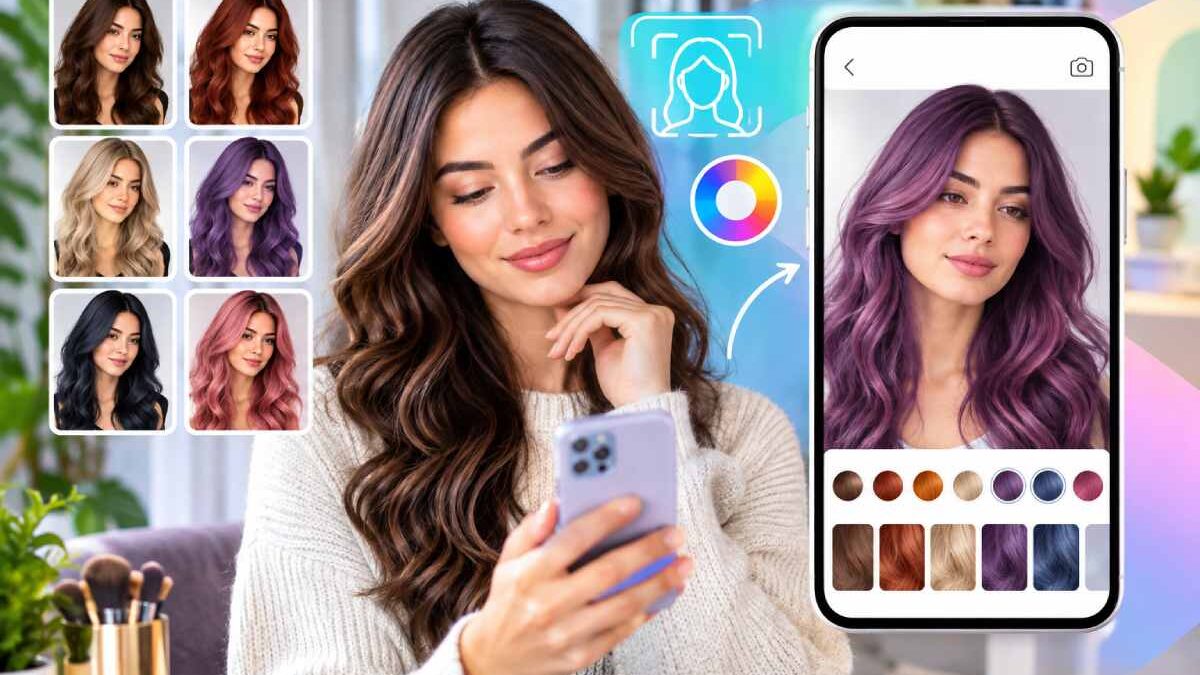

Most of us have stood in front of a mirror at some point wondering what we would look like with a completely different hair color. Maybe it was a bold shade you saw on social media, or a sudden urge for change after a long week. The problem was always the same: hair dye is not easy to undo. A color that looks great on a model can look very different on you, and fixing a bad dye job costs time, money, and sometimes a bit of hair health.
That is where virtual hair color tools come in. With a phone or a browser, you can now preview a new shade in a few seconds without touching a single bottle of dye.
Table of Contents
Why Trying Before Dyeing Makes Sense
Changing your hair color is a personal decision, and it is rarely a small one. Pastel and fashion shades like pink, lilac, or teal usually require bleaching first, which means more commitment and more upkeep. Before going through that process, it helps to see how a shade works with your skin tone, eye color, and overall style.
Virtual previews give you a low-risk way to experiment. If you hate the result, you close the app and nothing has changed. If you like it, you walk into a salon with a clearer idea of what you want, which also makes the conversation with your stylist much easier. Showing a photo of yourself with the color is far more useful than saying “something pinkish, but not too bright.”
How the Technology Works
Behind the simple interface, these tools rely on computer vision. First, the software detects your face and separates the hair region from the background and skin. This step is called segmentation, and it is the hardest part. Hair has fine strands, uneven edges, and lighting variations that make it tricky to outline accurately.
Once the hair area is identified, the tool applies a new color while keeping the natural highlights and shadows, so the result looks like real hair instead of a flat coat of paint. Better tools preserve texture and shine, which is why some filters look convincing while others look like a cheap overlay.
Modern versions can also work on video, tracking your hair frame by frame as you move your head. That is a big step up from the early filters, which often slipped off the hair or flickered at the edges.
Getting Better Results From Any Hair Filter
The quality of the output depends a lot on the photo you start with. A few simple habits make a noticeable difference:
- Use even lighting. Natural daylight works best. Harsh shadows or strong backlighting confuse the hair detection.
- Choose a clear background. If your hair blends into a dark or cluttered backdrop, the edges may look rough.
- Face the camera. Front-facing photos with your hair visible usually give cleaner results than extreme angles.
- Start with a high-resolution image. Low-quality photos make fine strands hard to detect.
If you want to test a bold shade quickly, a browser-based pink hair filter is an easy place to start, since you can upload a picture and see the result without installing anything. Try a few different tones as well. Soft pastel pink, hot pink, and rose gold can feel completely different to the same person.
Beyond Personal Use: Creators and Content
Hair color tools are not only for people deciding on a salon visit. Content creators use them to keep their videos fresh without changing their real appearance. A beauty channel can show ten different looks in one session, and a photographer can test creative concepts before a shoot. Small businesses, such as salons, can also use previews to help clients visualize a result before booking an appointment.
There is a creative side too. Plenty of people simply enjoy playing with their image for fun, whether it is for a profile picture, a themed post, or a costume idea. Because the process is quick, it encourages experimentation that would otherwise feel too risky.
Knowing the Limits
It is worth remembering that a digital preview is an approximation. Real hair color depends on your starting shade, hair condition, and the products used. A filter can show you the general direction, but it cannot predict how your hair will actually take the dye. Dark hair, for example, needs significant lightening before pink shows up the way it does on screen.
For that reason, think of these tools as a planning aid, not a promise. A good stylist can tell you what is realistic for your hair and how much maintenance the color will need, such as color-safe shampoo and regular touch-ups.
What Comes Next
The technology is improving quickly. Hair segmentation is getting more precise, and real-time effects are becoming smoother on ordinary phones. As this continues, virtual try-on is likely to become a standard part of how people explore beauty choices, much like virtual fitting rooms in online clothing stores.
For now, the main benefit is simple: you get to be curious without the consequences. Whether you are a creator looking for new content ideas or someone quietly wondering if pink would suit you, a few seconds of experimenting can answer the question long before you commit to the real thing.