
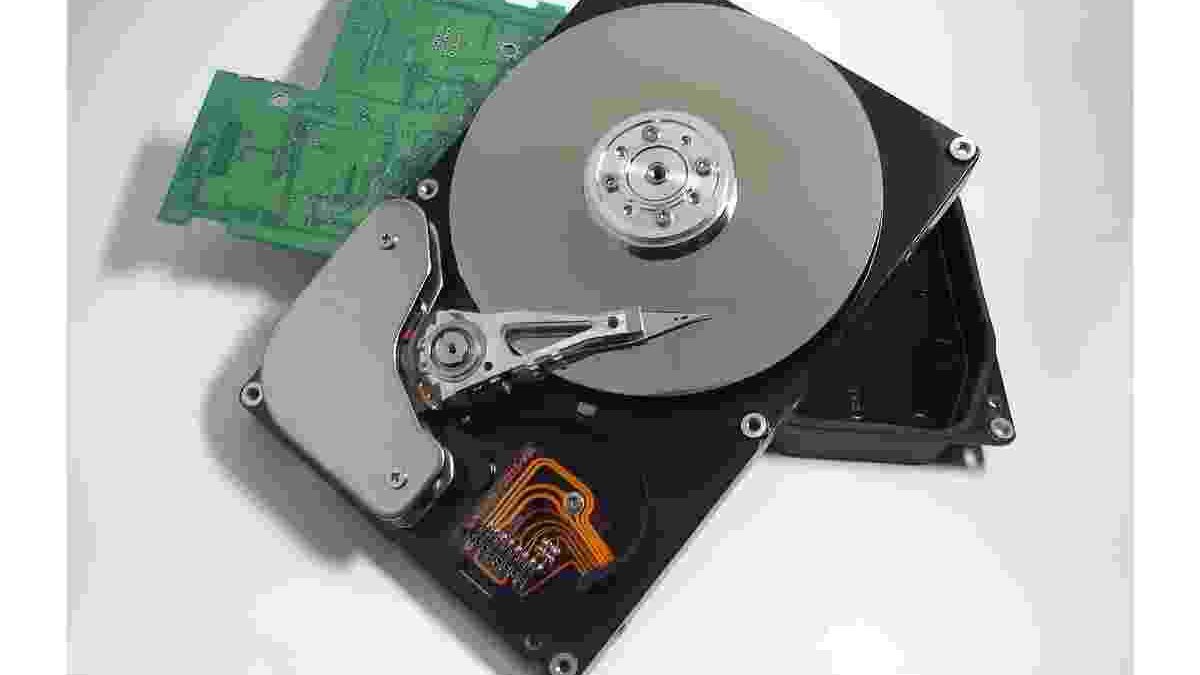
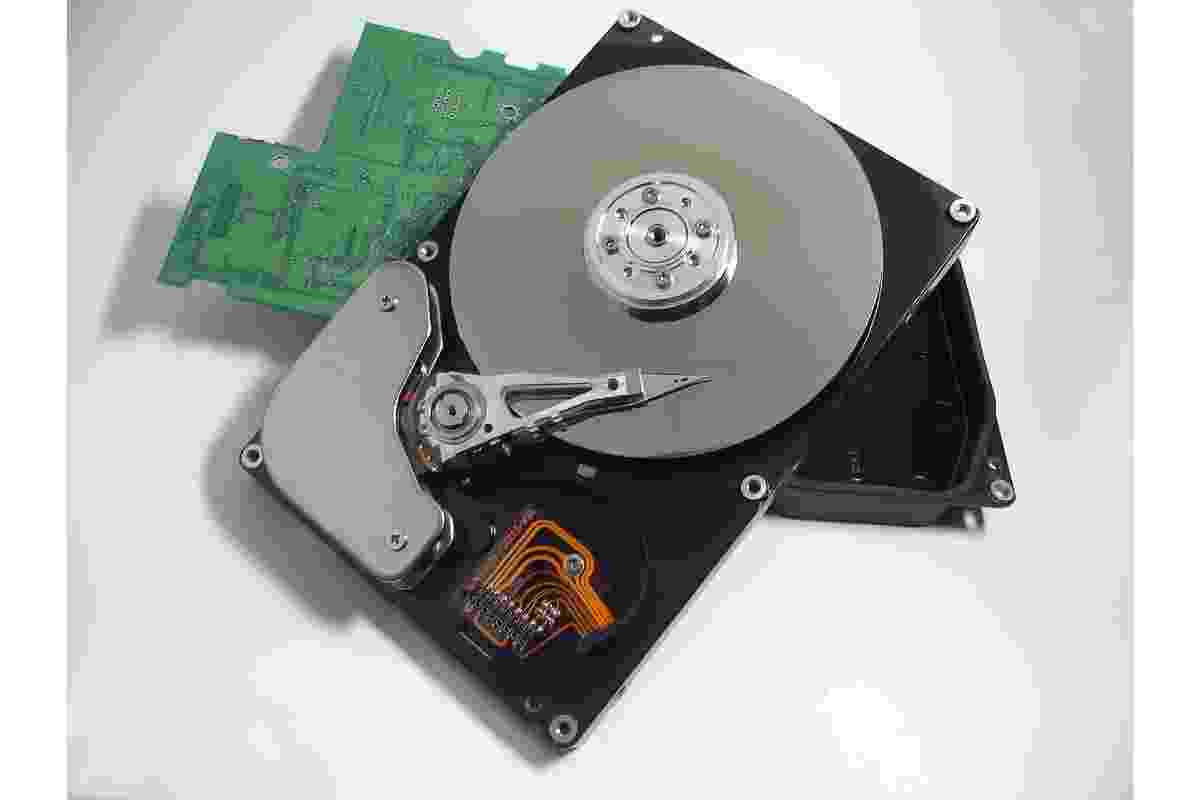
The idea of a petabyte hard drive sounds almost unbelievable. A single storage device capable of holding an enormous collection of videos, photographs, software, research files, and business records could transform how organisations preserve digital information. However, the technology being explored to achieve this goal is very different from the portable hard drives most people use today.
Researchers are investigating glass as a medium for long-term data storage. Instead of recording information on a spinning magnetic disk, this approach uses extremely precise laser pulses to encode information inside glass. The technology could offer impressive durability and storage density, but it also introduces challenges involving data writing, reading, cost, and practical use.
Although a commercially available, portable 1-petabyte glass drive is not yet an established consumer product, research into glass-based storage shows how future data preservation systems could evolve.
Table of Contents
What Is a Petabyte Hard Drive?
A petabyte is a unit of digital information used to measure extremely large amounts of data. One petabyte (PB) equals 1,000 terabytes (TB) in the decimal system used by storage manufacturers. It is also equivalent to one million gigabytes (GB).
In binary measurement, one pebibyte (PiB) equals 1,024 tebibytes. This distinction matters because operating systems and storage tools sometimes display capacity differently from manufacturers.
To understand the scale, consider these approximate decimal conversions:
- 1 petabyte equals 1,000 terabytes.
- 1 petabyte equals 1,000,000 gigabytes.
- 1 petabyte equals 1,000,000,000 megabytes.
- 1 petabyte equals 1,000,000,000,000,000 bytes.
Imagine storing a large collection of high-resolution photographs, films, software projects, scientific measurements, and business documents. A petabyte could accommodate an extraordinary amount of information, although the actual number of files would depend on their size and format.
For an ordinary computer user, this capacity is far beyond the needs of most personal storage setups. Even many businesses can operate comfortably with much smaller storage systems. Petabyte-scale capacity becomes more relevant when organisations manage huge archives, scientific datasets, cloud platforms, or large video libraries.
Why Are Researchers Exploring Glass Data Storage?
Traditional hard disk drives store information magnetically on rotating platters. Solid-state drives use electronic memory chips, while magnetic tape remains an important option for large archival systems.
Each technology has strengths, but long-term preservation creates a particular challenge. Storage media can deteriorate, equipment can become obsolete, and organisations may need to copy data onto newer systems to keep it accessible.
Glass-based storage offers a different approach. Researchers use ultrafast lasers to create microscopic structures inside a piece of glass. These structures encode information in three dimensions rather than relying only on a conventional surface.
Microsoft Research’s Project Silica is one of the best-known efforts in this area. Its research explores ways to write data into glass, preserve it for extended periods, and retrieve it using specialised optical equipment.
Glass is attractive because it can resist moisture, electromagnetic interference, and several environmental conditions that can affect other storage media. However, durability depends on the material, manufacturing process, storage environment, and handling. Glass can also crack or break if it is physically damaged.
The goal is not simply to make a hard drive out of glass. It is to develop a complete storage system that can write information, preserve it, read it accurately, and do so at a practical cost.
How Does a Glass Hard Drive Store Data?
Glass-based storage uses a process known as laser writing. A specialised laser focuses extremely short pulses into precise locations within a glass material. These pulses modify the material in ways that can represent digital information.
The resulting microscopic structures are called voxels. The term refers to three-dimensional units similar to pixels, which represent individual points in a two-dimensional image.
Unlike a conventional hard drive, which records magnetic patterns on rotating platters, a glass storage system can encode information across multiple internal layers. This three-dimensional arrangement helps researchers increase the amount of information stored within a relatively small piece of material.
How the Writing Process Works
First, a computer converts files into digital data that can be encoded by the storage system. The writing equipment then directs laser pulses to carefully selected locations within the glass.
The laser changes the material at those points, creating structures with measurable optical properties. Depending on the technique, researchers can encode information through changes in polarisation-related behaviour or other properties of the glass.
These changes represent data that can later be interpreted by a reading system.
How the Reading Process Works
Reading requires specialised optical equipment. The system directs light through the glass and captures information about how the encoded structures affect that light.
Software analyses the captured measurements and translates them back into digital information. Machine learning can assist with classification and decoding when different structures produce complex optical signals.
This is an important distinction: the glass itself is not a conventional plug-and-play hard drive. A practical product also needs readers, controllers, software, error correction, and a reliable method of retrieving stored files.
Has a One-Petabyte Glass Hard Drive Actually Been Built?
The headline about a first-petabyte glass hard drive describes a future possibility rather than a verified, commercially available portable product.
Research has demonstrated meaningful progress in storing information inside glass, but the published results should not be confused with a finished one-petabyte external drive.
In February 2026, Microsoft Research reported a glass-based archival storage system in a paper published in Nature. The research demonstrated approximately 4.8 TB of usable capacity in a glass piece measuring 120 mm square and 2 mm thick, using hundreds of internal layers.
That is a substantial research achievement, but it is still far below one petabyte. Reaching petabyte capacity would require major advances in storage density, manufacturing, writing speed, system design, or a combination of these factors.
The distinction matters because a laboratory demonstration and a consumer storage product have different requirements. A commercial device must also be affordable, dependable, straightforward to use, and compatible with existing computers and data-management systems.
For now, a petabyte of glass storage should be understood as a potential direction for future storage technology—not a standard portable drive that consumers can simply connect to a laptop.
Project Silica and the Latest Research Developments
Microsoft’s Project Silica aims to make glass-based storage practical for preserving valuable information over long periods.
Earlier research focused heavily on specialised fused silica, a highly pure glass material. This material can support precise laser writing, but its cost and availability present challenges when considering large-scale deployment.
In its February 2026 research update, Microsoft described progress in extending the technology to borosilicate glass. Borosilicate is used in products such as laboratory glassware and heat-resistant cookware. Using a more accessible material could help reduce some manufacturing barriers.
The research also explored simpler reading equipment, improved writing methods, and techniques for writing multiple data points in parallel. Parallel writing is important because encoding enormous quantities of information one point at a time would make the process impractically slow.
Microsoft reported that accelerated ageing tests suggested the written information in borosilicate glass could remain intact for more than 10,000 years under the studied conditions. This is a research-based projection, not a guarantee that every future glass storage product will preserve every file for that duration.
These advances show that the field is moving beyond the idea of simply placing data inside glass. Researchers are also addressing the speed, reliability, material cost, and equipment needed to build a complete archival system.
Why Glass Storage Could Be Useful for Long-Term Archives
One potential advantage of glass is its suitability for preserving information that does not need to be changed frequently.
Archives may contain historical records, scientific observations, legal documents, photographs, films, and cultural material that organisations want to retain for decades or centuries.
Magnetic hard drives and tapes can be effective for these purposes, but their media and supporting hardware have limited lifetimes. Organisations may need to migrate their archives as equipment ages or formats become obsolete.
A glass-based system could reduce the frequency of media replacement if its long-term durability and reading infrastructure perform as expected.
For example, a film archive could preserve original digital masters. A research institution could retain important scientific datasets, while a cultural organisation could store historical recordings for future generations.
Glass storage may also help reduce some ongoing maintenance requirements. However, the overall environmental impact would depend on manufacturing, laser-writing equipment, energy use, transport, and the infrastructure required to read the media.
Long media life is valuable, but it does not automatically solve every problem associated with digital preservation.
Is a Glass Petabyte Drive Fragile?
The word fragile needs some context. Glass can be physically vulnerable to cracking, chipping, or breaking, depending on its composition, thickness, shape, and how it is handled.
However, that does not mean the technology is unsuitable for storage. Researchers can design protective housings, controlled storage environments, and systems that minimise unnecessary handling.
The durability of the recorded information is also different from the physical strength of the glass. Data may remain stable inside an intact piece of glass even when conventional storage media would require replacement or migration.
Still, a practical glass archive would need protection against physical damage. It would also need reliable equipment to retrieve the data, and organisations would need to maintain compatible readers and software.
This is why glass-based storage is currently more relevant to specialised archival applications than everyday portable computing.
How Does Glass Storage Compare With External Hard Drives?
An external hard drive remains a convenient option for everyday users. It connects to a computer through a supported interface and allows files to be copied, organised, and retrieved without specialised optical-reading equipment.
For students, home users, and professionals, an external hard drive can provide additional storage for documents, photographs, videos, and backup copies.
Glass storage has a different purpose. Its strongest potential advantage is long-term preservation, rather than providing a simple, frequently updated storage device for daily work.
The following comparison highlights the main differences:
| Feature | External hard drive | Glass-based archival storage |
|---|---|---|
| Storage method | Magnetic recording | Laser-written optical structures |
| Typical use | Daily files and backups | Long-term data preservation |
| Data access | Standard computer interfaces | Specialised optical reading equipment |
| Updating files | Generally straightforward | Designed primarily for archival storage |
| Physical considerations | Mechanical or electronic failure risks | Glass damage and reader-system requirements |
| Consumer availability | Widely available | Research and specialised development |
The comparison is about general technology categories. Actual capacities, performance, reliability, and costs vary by product and implementation.
For most personal users, a conventional external drive or solid-state drive is far more practical today. Glass technology may eventually complement existing storage systems rather than replace every device.
Who Might Need Petabyte-Scale Storage?
Petabyte capacity is most relevant to organisations that generate or preserve enormous quantities of information.
Cloud providers and data centres manage information for millions of users and businesses. They need storage systems that balance capacity, cost, reliability, energy use, and access speed.
Scientific institutions may generate large datasets through astronomy, climate modelling, medical research, and advanced simulations. Preserving important results can be as valuable as producing them.
Film and media archives store high-resolution footage, production masters, sound recordings, and historical content. These files can consume significant storage space, particularly when multiple versions must be preserved.
Government and cultural archives may need to retain important records for decades. Long-lived media could be useful where records must remain available across generations.
Developers and technical professionals also work with large files, although most individual projects do not require petabytes. People choosing a computer for software development should focus on processing power, memory, storage speed, and upgrade options. A guide to laptops for programming can help explain the practical requirements of this type of workload.
Students who need a flexible computer for assignments, research, and everyday multitasking can also explore the Lenovo IdeaPad Flex 5. Choosing a laptop with suitable memory and storage can make it easier to manage coursework, software tools, and large project files alongside a reliable backup routine.
For ordinary students and home users, the more immediate priority is usually keeping important files organised and maintaining reliable backups rather than investing in extremely large storage systems.
How Much Data Is the World Generating?
The growth of digital content is one reason researchers are exploring new storage methods. Smartphones, connected devices, high-resolution video, scientific instruments, business systems, and artificial intelligence all contribute to the amount of information being generated.
Older industry forecasts estimated that the global datasphere could reach 175 zettabytes of data created, captured, or replicated in 2025. That figure was a forecast made in earlier research, not a current measurement that should be treated as an exact final total.
A zettabyte equals 1,000,000,000,000 gigabytes in decimal units. One petabyte is one millionth of a zettabyte, so a zettabyte represents an enormous amount of information.
However, data generated is not the same as data that must be stored permanently. Much of the world’s data is temporary, duplicated, processed, or deleted. Storage providers therefore need to determine which information requires fast access, which can be archived, and which no longer needs to be retained.
This distinction helps explain why future storage systems will probably combine different technologies. Fast solid-state storage, hard drives, magnetic tape, cloud platforms, and potentially glass archives can each serve different purposes.
What Could Prevent Glass Storage From Becoming Mainstream?
Several challenges remain before glass-based storage could become a common alternative to external drives.
Writing speed: Encoding large volumes of data requires a fast and reliable writing process. Parallel laser systems may improve throughput, but the overall system must still handle huge datasets efficiently.
Reading equipment: Users need a practical way to retrieve stored information. Specialised optical readers add hardware and maintenance requirements that ordinary drives do not have.
Manufacturing costs: Glass materials, precision lasers, optical components, and production systems must become economical enough for the intended market.
Data integrity: Storage systems need error detection, error correction, and reliable decoding to ensure that information remains readable.
Physical protection: Glass media must be protected against damage during transport, storage, and handling.
Compatibility and standards: Long-term archives require documentation, file formats, software, and hardware that remain usable as computing systems evolve.
These challenges do not mean the technology will fail. They explain why laboratory results must be followed by practical engineering and commercial development before consumers can rely on a product.
Final Thoughts on the Future of Petabyte Storage
A petabyte hard drive made from glass represents an intriguing possibility for the future of digital storage. Laser-written glass could offer high data density and long-term durability, making it a promising option for archives that need to preserve valuable information for generations.
However, the research needs to be described accurately. Microsoft Research’s 2026 Project Silica work demonstrated a glass storage system with approximately 4.8 TB of capacity in a small glass piece, not a commercially available one-petabyte portable hard drive.
Further advances in writing speed, storage density, manufacturing, reading equipment, and physical protection will determine how far the technology can progress.
For everyday users, external hard drives and SSDs remain more practical for storing and updating files. For data centres, scientific institutions, and long-term archives, glass storage could become a useful additional option if the technology proves reliable and affordable at scale.
The most important development is not simply the prospect of storing a petabyte in glass. It is the possibility of preserving digital information for much longer while reducing the need to replace storage media repeatedly.