
Table of Contents
NVIDIA RTX 2080 Super Review: Performance, Specifications, and Gaming Tests
The NVIDIA GeForce RTX 2080 Super is a high-end graphics card built on NVIDIA’s Turing architecture. Released in July 2019, it improved on the original RTX 2080 with more processing cores, faster GDDR6 memory, and higher memory bandwidth. It also retained hardware support for real-time ray tracing and AI-powered graphics features.
The RTX 2080 Super was designed for gamers who wanted strong 1440p performance and a capable 4K gaming experience. However, its improvements over the original RTX 2080 were relatively modest. Understanding its specifications, performance, power consumption, and limitations helps buyers decide whether this GPU still suits their needs.
NVIDIA RTX 2080 Super: Technical Specifications
The RTX 2080 Super uses NVIDIA’s TU104 graphics processor, manufactured using a 12nm process. It belongs to the Turing generation, which introduced dedicated hardware for ray tracing and AI-assisted rendering to GeForce gaming cards.
Here are the key specifications of the reference design.
| Specification | NVIDIA RTX 2080 Super |
|---|---|
| Architecture | Turing |
| GPU | TU104 |
| CUDA cores | 3,072 |
| Base clock | 1,650 MHz |
| Boost clock | 1,815 MHz |
| Memory | 8GB GDDR6 |
| Memory speed | 15.5 Gbps |
| Memory interface | 256-bit |
| Memory bandwidth | 496 GB/s |
| Total graphics power | Approximately 250W |
| Power connectors | 6-pin + 8-pin on the reference design |
| Ray tracing | First-generation RT cores |
| AI processing | Tensor cores |
Specifications can vary slightly between Founders Edition and partner cards. Factory-overclocked models may offer higher boost clocks or different cooling systems.
What Makes the RTX 2080 Super Different?
Compared with the original RTX 2080, the Super version has more CUDA cores and faster memory. It provides 3,072 CUDA cores instead of 2,944, while memory speed increases to 15.5 Gbps.
The 256-bit memory interface remains unchanged, but the faster memory increases bandwidth to 496 GB/s. This can help in workloads that benefit from quicker data transfers between the GPU and its video memory.
The card also retains 8GB of GDDR6 VRAM. This was a substantial capacity for many games at launch, although demanding newer games and high-resolution textures can place greater pressure on memory. Buyers should consider this limitation when planning a system for modern titles.
Turing Architecture, Ray Tracing, and DLSS
Turing introduced a different approach to graphics processing. Alongside conventional shader cores, compatible GPUs include dedicated RT cores for ray tracing and Tensor cores for AI-related workloads.
Ray tracing simulates how light interacts with surfaces. In supported games, it can improve reflections, shadows, and lighting effects. These features can make scenes look more realistic, but they also require additional processing power.
The RTX 2080 Super supports hardware-accelerated ray tracing. However, enabling demanding ray-traced effects can reduce frame rates, particularly at 4K resolution. The final result depends on the game, graphics settings, and available performance-enhancement features.
How DLSS Helps
Deep Learning Super Sampling, or DLSS, uses AI-based image reconstruction to improve performance in supported games. Instead of rendering every frame at the full output resolution, a compatible game can render at a lower internal resolution and reconstruct the image.
This can increase frame rates while maintaining good visual quality. Results vary by game and DLSS version, so users should compare image quality and performance rather than assume every title will benefit equally.
The RTX 2080 Super supports DLSS, but it does not support every feature introduced in later NVIDIA GPU generations. Buyers should check the requirements of specific games before relying on a particular rendering feature.
Founders Edition Design and Cooling
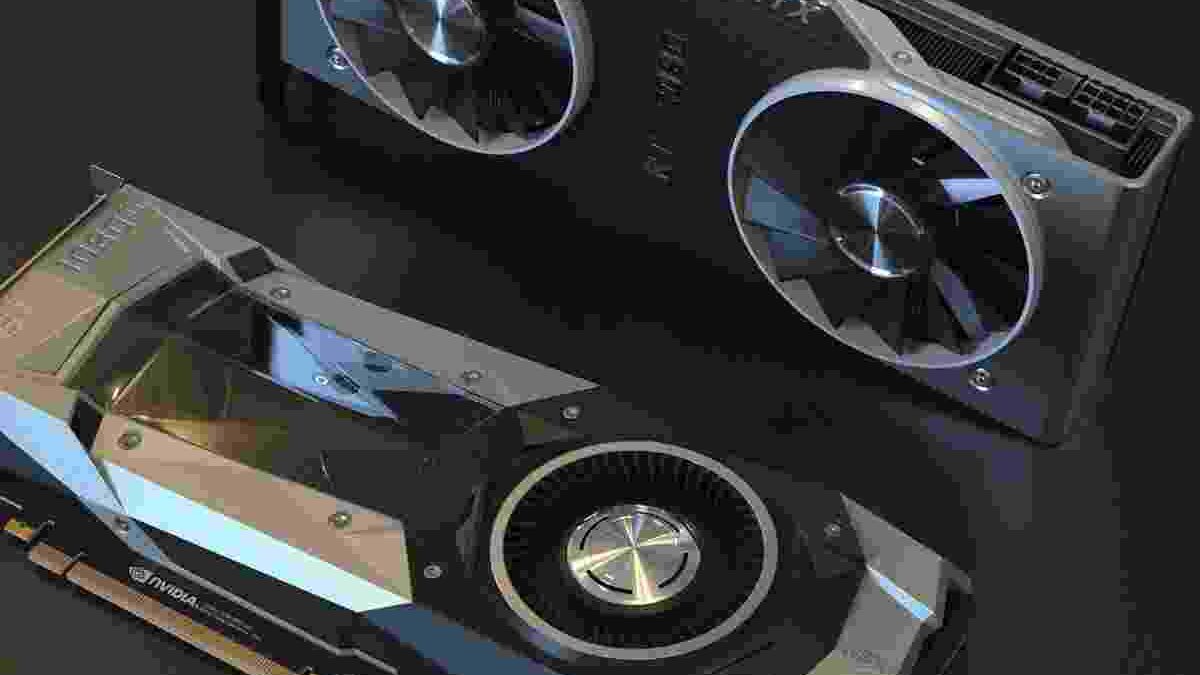
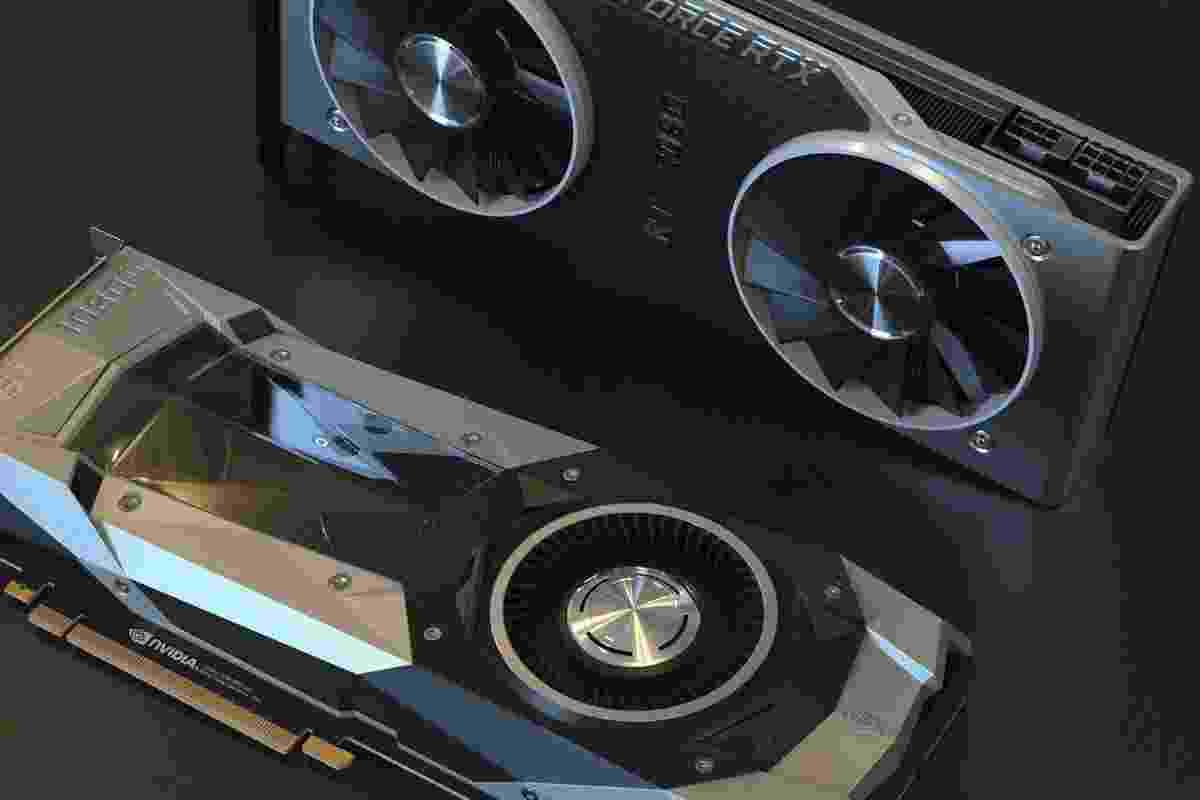
The RTX 2080 Super Founders Edition uses a metal shroud and a dual-fan cooling design. Its compact appearance suits many desktop builds, while the clean finish gives the card a premium look.
The two fans draw air across the heatsink to remove heat from the GPU. Under light workloads, the card may operate relatively quietly. During extended gaming sessions, fan speed can increase as the GPU temperature rises.
One consideration is that the Founders Edition cooler directs some heated air back into the computer case. Good case ventilation is therefore important, especially when the card is installed alongside a powerful processor.
Partner models from manufacturers such as MSI and Gigabyte may use larger heatsinks, additional fans, or factory-overclocked settings. These designs can affect temperatures, noise levels, card dimensions, and power requirements. Always check the exact model before buying.
Power Supply Requirements
The reference RTX 2080 Super has a graphics power rating of approximately 250W. NVIDIA and board partners commonly recommend a 650W power supply, although the ideal capacity depends on the entire system.
Before installation, check that your power supply provides the required PCIe power connectors. Also confirm that your case has enough room for the card and adequate airflow around its fans.
A reliable power supply is particularly important in systems with high-performance CPUs and multiple storage drives. Avoid choosing a unit based on wattage alone; quality, protection features, and connector compatibility matter too.
Gaming Benchmarks and Real-World Performance
The RTX 2080 Super was designed primarily for high-performance gaming. Independent testing at launch found that it was generally around 4–6% faster than the original RTX 2080 across several tested games, although the difference varied by title and resolution. <Cite refs={[“turn635003search1″,”turn635003search11”]} />
This is a useful improvement, but it is not a major generational leap. The card offers a little more performance without completely changing the gaming experience.
1440p Gaming
At 2560 × 1440 resolution, the RTX 2080 Super can deliver high frame rates in many games. It is a suitable match for monitors with refresh rates above 60Hz, provided the game and graphics settings allow the GPU to produce enough frames.
Competitive games may run particularly well because they often place less pressure on the graphics card than demanding cinematic titles. More graphically intensive games can require adjustments to shadows, anti-aliasing, or ray-tracing settings.
Your processor also affects results. A CPU bottleneck can limit frame rates even when the graphics card has additional processing capacity available.
4K Gaming
The RTX 2080 Super can handle many games at 3840 × 2160 resolution, but consistent 60 frames per second at maximum settings is not guaranteed. Performance depends on the game, texture quality, ray tracing, and other effects.
DLSS can help in supported titles, making it easier to balance image quality and frame rate. Still, the card’s 8GB memory capacity and older architecture should be considered when evaluating demanding modern games.
For more context about a different Turing graphics card, see our guide to RTX 2080 Super characteristics. When comparing GPUs, remember to consider actual benchmark results rather than relying on specifications alone.
RTX 2080 Super vs. RTX 2080 Ti
The RTX 2080 Ti sits above the RTX 2080 Super in NVIDIA’s original Turing lineup. It offers more CUDA cores and 11GB of GDDR6 memory, compared with the Super card’s 3,072 CUDA cores and 8GB.
That additional hardware can provide better performance in demanding games, particularly at higher resolutions. However, the RTX 2080 Ti was also positioned at a higher price.
The RTX 2080 Super can be a more balanced option when its price is substantially lower. It is important to compare the condition and cost of used cards, as well as power consumption and cooling, before choosing between them.
Who Should Consider the RTX 2080 Super Today?
The RTX 2080 Super may still interest buyers building a gaming PC on the used market. It offers capable 1440p performance, hardware ray tracing, and support for DLSS in compatible games.
It can also support GPU-accelerated creative applications, including certain video-editing and 3D-rendering workflows. Professional users should verify that their chosen software supports the card and its available features.
However, this is an older GPU generation. Buyers should compare it with newer graphics cards based on current prices, performance, power efficiency, software support, and memory capacity. A cheap card may not be good value if it has been heavily used or needs repairs.
The same careful approach applies when comparing complete desktop systems. Our article on the Alienware Aurora R9 design language explores another gaming PC design, while the Panasonic Toughbook FZ-55 represents a different category of computer built for professional mobility rather than high-end desktop gaming.
For users who need computers for demanding outdoor work rather than gaming, rugged devices offer a different set of features. Our guide to waterproof laptops, including the Getac X500, Durabook Z14I, and Getac B360, explores alternatives designed for challenging working environments. These devices serve a different purpose from a desktop graphics card, so choose hardware according to your specific needs.
Final Verdict
The NVIDIA RTX 2080 Super remains an interesting example of the Turing generation’s high-end graphics hardware. Its 3,072 CUDA cores, 8GB of GDDR6 memory, 496 GB/s bandwidth, and dedicated ray-tracing hardware make it capable of strong 1440p gaming and usable 4K performance in many titles.
Its biggest strength is the balance between performance and features. Its main limitations are the modest improvement over the original RTX 2080, 8GB of VRAM, and the power and cooling requirements of a 250W card.
Whether it is worth buying today depends on its price and condition. Compare it with newer alternatives, confirm compatibility with your PC, and check real-world benchmarks for the games you play. If the price is right, the RTX 2080 Super can still serve as a capable gaming GPU.