
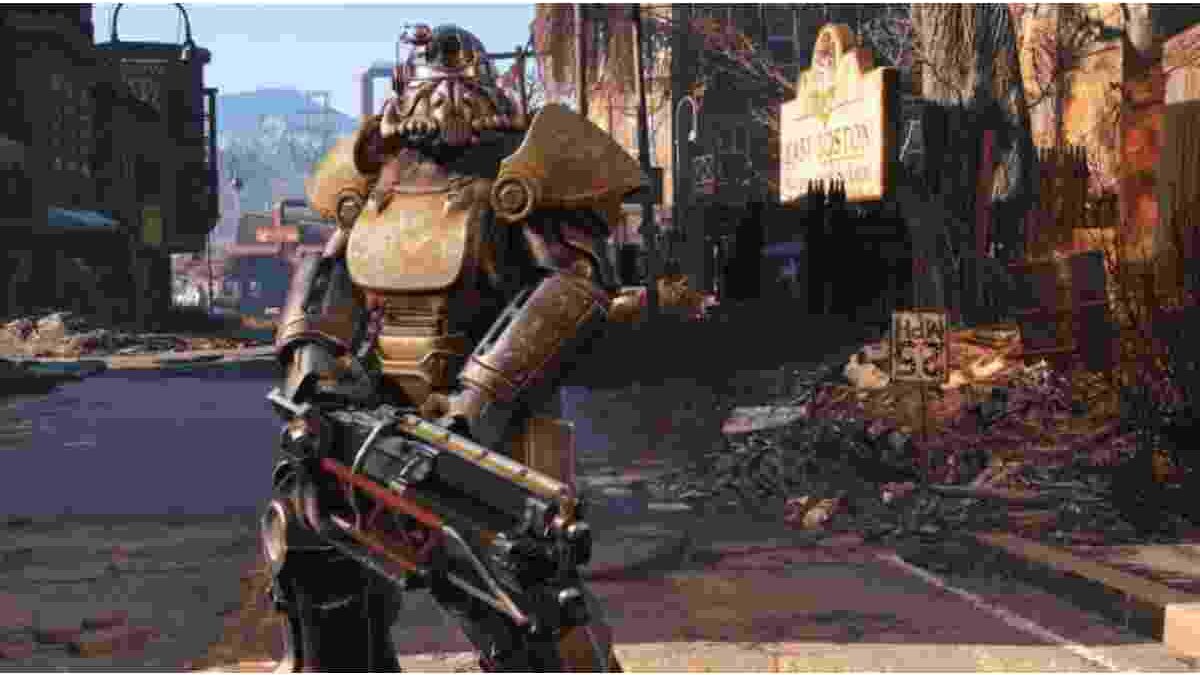
Fallout 76 offers a large open world where players can explore dangerous locations, complete quests, collect resources, and fight enemies across the post-apocalyptic wasteland. However, the default PC settings may not provide the ideal experience for every player. Some users prefer a wider field of view, reduced visual effects, improved mouse controls, or adjustments that make the game feel more comfortable.
One way PC players have traditionally customized Bethesda games is by editing configuration files. Fallout 76 also provides configuration options that can be adjusted through its custom INI file. These settings may help personalize the visual experience and controls, although not every tweak works consistently across different game versions or hardware configurations.
This guide explains how to prepare the Fallout 76 custom configuration file and reviews several settings related to fullscreen mode, depth of field, field of view, anti-aliasing, mouse acceleration, grass, and autosaving. Before making changes, remember to back up your original files and test adjustments individually.
Table of Contents
How to Edit the Fallout 76 Custom INI File
Unlike the configuration process used in some older Bethesda games, Fallout 76 has traditionally used a separate custom INI file for certain player adjustments. Editing the wrong file or changing settings without keeping a backup can create unnecessary problems.
Follow these steps to prepare the custom configuration file:
- Open your Documents folder on your PC.
- Navigate to
Documents\My Games\Fallout 76. - Look for the file named
Fallout76Prefs.ini. - Make a copy of the original file so you can restore it if necessary.
- Create or rename a separate copy as
Fallout76Custom.ini, following the configuration method supported by your game installation. - Open the custom file using Notepad or Notepad++.
- Add the settings you want to test under their appropriate configuration sections.
Keep the original configuration file unchanged. Also, avoid deleting existing settings unless you understand what they control. If the game already contains a custom INI file, review it before making another copy.
The examples below come from community-shared Fallout 76 configuration tweaks. They should be treated as historical PC customization suggestions rather than guaranteed settings for every current version of the game.
1. How to Activate Fullscreen Mode in Fallout 76
Some players prefer fullscreen mode because it provides a dedicated gaming display and can make switching between different display configurations easier. Depending on the game version, graphics driver, and Windows settings, fullscreen behavior may differ.
Fallout 76’s display options should be your first choice when changing the screen mode. If you are experimenting with configuration files, check the relevant display settings supported by your installation rather than adding unverified commands.
After changing the display mode, restart the game and check whether the resolution, refresh rate, and screen behavior are correct. If you experience black screens, flickering, or unexpected display changes, restore the previous configuration.
2. How to Disable Depth of Field in Fallout 76
Depth of field is a visual effect that changes how sharply objects appear at different distances. It can create a cinematic appearance, but some players prefer a clearer image without the effect.
A historical community-shared configuration example used the following settings:
[ImageSpace]
bDoDepthOfField=0
bDoRadialBlur=0
iRadialBlurLevel=0
bMBEnable=0
bLensFlare=0
bScreenSpaceBokeh=0
bDynamicDepthOfField=0
Other values previously shared for depth-of-field adjustments include:
[Show]
fDOFBlendRatio=0
fDOFMinFocalCoefDist=999999
fDOFMaxFocalDist=9999999999
fDOFDynamicFarRange=9999999999
fDOFCenterWeightInt=0
fDOFFarDistance=9999999999
These entries are examples from older community configuration guidance. Some names or values may be ignored by newer game versions, and unsupported entries may have no visible effect.
After testing the settings, compare the image quality in different environments. If the results are worse or the game behaves unexpectedly, remove the changes and restore your backup.
3. How to Adjust the Field of View in Fallout 76
Field of view, commonly called FOV, determines how much of the surrounding environment appears on the screen. A wider FOV allows players to see more of the area around their character, while a narrower setting creates a more focused view.
This adjustment can be especially useful for players who find the default camera perspective uncomfortable. It may also change how movement and distance appear during gameplay.
A commonly shared configuration example uses these values:
[Display]
fDefault1stPersonFOV=90.00
fDefaultWorldFOV=90.00
The example uses 90 degrees, but the preferred value depends on personal comfort and the game’s supported settings. Some older community discussions mention experimenting with values such as 100 or 110. However, higher values can create visual distortion, clipping, or animation-related issues.
Make small adjustments rather than immediately choosing an extreme value. Test the result in both indoor and outdoor environments, and check whether the camera remains comfortable during combat and exploration.
4. How to Change Anti-Aliasing in Fallout 76
Anti-aliasing helps reduce the jagged edges that can appear around objects, buildings, characters, and other elements in a game. Fallout 76 has used temporal anti-aliasing (TAA) in its graphics configuration, while older community guides have discussed switching to FXAA.
One historical example is:
[Display]
sAntiAliasing=FXAA
FXAA and TAA use different techniques to smooth edges. The visual result can vary depending on the game’s implementation, resolution, and graphics hardware.
Changing anti-aliasing may affect image sharpness, edge quality, and performance. If the setting is ignored or produces an undesirable result, use the graphics options available in the current game version and restore the original configuration.
5. How to Disable Mouse Acceleration in Fallout 76
Mouse acceleration changes how far the camera moves according to the speed of your mouse movement. Some players prefer to disable it because they want a more consistent relationship between physical mouse movement and in-game camera movement.
A consistent mouse response can be helpful when aiming, turning quickly, or making small adjustments during combat.
Older configuration instructions sometimes recommend adding a mouse acceleration setting under the Controls section. However, the exact setting name and its support can vary between game versions. Avoid copying malformed entries from older guides, particularly commands containing spaces or missing characters.
You should first check the available in-game mouse settings and Windows pointer configuration. If you test an INI adjustment, change only one setting at a time and verify whether it actually affects the game.
Players who enjoy strategy-based gaming may also like exploring our guide to Clash Royale strategy, which covers a different approach to planning and decision-making in competitive games.
6. How to Normalize Vertical Mouse Sensitivity
Vertical mouse sensitivity determines how quickly the camera moves up and down compared with horizontal movement. Some players prefer similar sensitivity in both directions because it makes aiming and camera control feel more predictable.
Older Fallout 76 community instructions shared the following example:
[Controls]
fMouseHeadingXScale=.021
fMouseHeadingYScale=.3738
The original guidance also listed different vertical sensitivity values for different screen aspect ratios:
- 4:3 aspect ratio:
0.028 - 16:9 aspect ratio:
0.3738 - 16:10 aspect ratio:
0.336 - 21:9 aspect ratio:
0.42
These are historical suggested values, not universal recommendations. Mouse sensitivity depends on the game’s current configuration behavior, the player’s preferences, and other input settings. Test the result carefully instead of assuming that a particular value will work equally well for every setup.
7. How to Disable Grass in Fallout 76
Grass and other environmental details help create the appearance of the wasteland. However, rendering dense vegetation can add to the graphics workload, particularly on systems with limited resources.
Some older community tweaks attempted to reduce grass rendering through configuration settings. One example shared in previous guides was:
[Grass]
iMinGrassSize=1
bAllowCreateGrass=0
The original instructions used the heading [Herb], but configuration section names should not be changed or copied blindly. The game may ignore unsupported section names or settings.
Disabling grass can also create visual problems, including flickering or unexpected environmental behavior. It may not produce a meaningful FPS improvement on every PC. If you want better performance, test the game’s available graphics options first and compare the results before keeping any custom changes.
8. How to Adjust the Autosave Interval
Autosaving helps protect progress by periodically recording game data. Some older community instructions suggested changing the autosave interval through a configuration entry.
The historical example was:
[SaveGame]
fAutosaveEveryXMins=2.0000
The value shown represents a suggested two-minute interval in that older guide. However, Fallout 76’s saving behavior may be controlled differently from traditional single-player games, and this entry may not be supported or effective in every version.
Do not rely on an unverified INI setting as your only protection against lost progress. Allow the game to complete its normal saving process and avoid closing it while important operations are taking place.
9. How to Improve FPS on a High-End PC
A powerful PC does not automatically guarantee a stable frame rate. Performance can depend on the processor, graphics card, memory, storage, resolution, driver version, background applications, and game-specific limitations.
If Fallout 76 runs at only 20–25 FPS on a high-end system, start by identifying the source of the problem rather than applying several configuration changes at once.
Consider these troubleshooting steps:
- Update your graphics drivers using the official software provided by your GPU manufacturer.
- Check whether Fallout 76 is using the dedicated graphics card rather than integrated graphics.
- Reduce demanding graphics options and test the frame rate again.
- Close unnecessary background applications that consume CPU or memory resources.
- Check your Windows power mode and ensure your PC is not running under an unintended power-saving configuration.
- Monitor CPU and GPU usage to identify possible performance bottlenecks.
- Verify the game files through the launcher or platform you use.
- Test different display resolutions and graphics presets to identify settings that affect performance.
Players who use multiple gaming platforms may also find our guide on how to share PS4 games useful for understanding game-sharing features on PlayStation.
Additional Gaming Tips for PC Players
Customizing Fallout 76 is only one part of improving your overall gaming experience. PC players often need to understand where games store their files, how screenshots are saved, and how to manage their digital libraries.
For example, if you regularly capture gameplay images, our guide to the Steam Store screenshot process can help you understand screenshot-related features. You can also read about the Steam screenshot folder to learn where Steam saves captured images on your computer.
Players who enjoy dark fantasy action RPGs may also be interested in exploring games similar to Diablo. These titles offer different ways to experience dungeon exploration, character progression, combat, and equipment collection.
If you enjoy location-based mobile gaming as well, our guide on how to invite friends to Pokémon GO Mewtwo raids covers another type of cooperative gaming experience.
Final Thoughts
Fallout 76 offers several ways to customize the PC gaming experience, but configuration changes should always be approached carefully. Adjustments to FOV, depth of field, anti-aliasing, mouse controls, and graphics settings can help players experiment with different visual and control preferences.
However, older community-shared INI tweaks may not work with every game update. Some entries may be ignored, while others could cause unexpected visual or performance problems. Always back up your original files, make one change at a time, and test the results before keeping an adjustment.
For the best experience, combine careful configuration testing with sensible graphics settings, updated drivers, and hardware monitoring. This approach makes it easier to identify what actually improves gameplay without creating unnecessary problems.